Crawlspace Encapsulation in Missouri: Is It Worth the Investment?
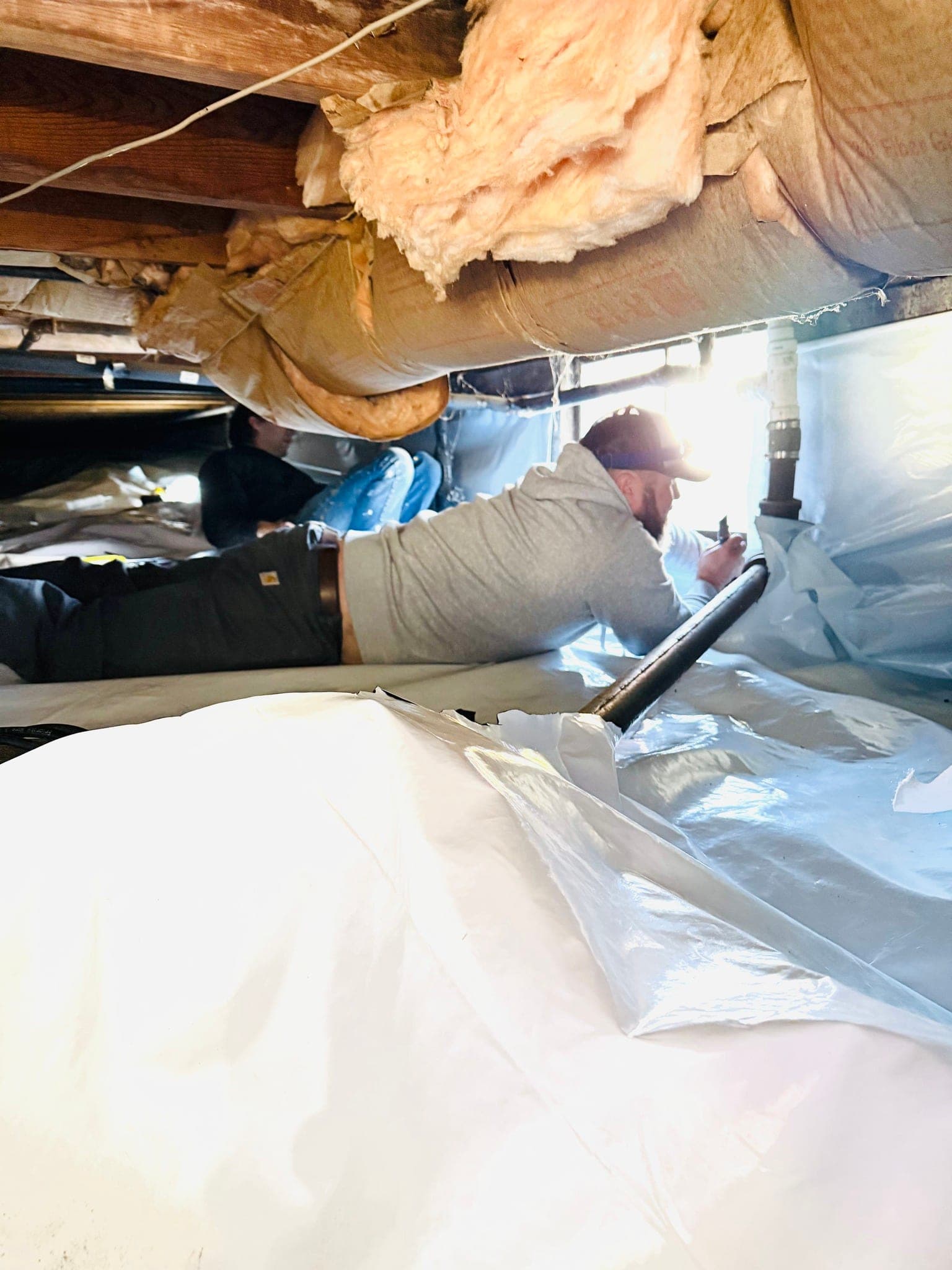
If you have a crawlspace, you're breathing it. Most Missouri homeowners don't realize that up to 40% of the air in their home's living space originates in the crawlspace — pulled up through floors, outlets, and gaps by a phenomenon called the stack effect. Whatever's down there (moisture, mold, radon, pest droppings, mildew odors) ends up upstairs.
Eagle Air's crawlspace encapsulation service seals the crawlspace from soil moisture and outside humid air — a common upgrade when indoor humidity, odors, or structural concerns won't go away.
Traditional vented crawlspaces made sense in dry climates. In Missouri, they often create more problems than they solve.
That's where encapsulation comes in. But at $5,000 to $15,000 for a professional job, it's a fair question: is it actually worth the money?
For most Missouri homes, the answer is yes. Here's why.
What's Wrong With a Vented Crawlspace in Missouri
Traditional crawlspaces have open vents at the perimeter, based on the theory that airflow will keep moisture out. In a dry climate, that's true. In Missouri's climate, it's the opposite:
- Summer humidity (often 70-90%) pours into the crawlspace through those vents. Warm, moist air meets cooler surfaces (ductwork, plumbing, floor framing) and condenses.
- Temperature swings between seasons create repeated condensation cycles.
- Moisture rises through the wood subfloor, feeding mold and mildew growth.
- Radon can enter through soil or cracks in the foundation, pooling in the crawlspace and rising into the home.
- Pest activity increases in cool, damp, accessible spaces.
Over years, this leads to wood rot, insulation degradation, visible mold, persistent musty smells, and measurable impact on indoor air quality and health.
What Encapsulation Actually Is
Crawlspace encapsulation is a full-system approach to sealing the crawlspace off from outside air and soil moisture. A proper encapsulation includes:
- Heavy-duty vapor barrier (10-20 mil polyethylene) installed across the floor and up the walls, with all seams sealed
- Sealed crawlspace vents (the old perimeter vents get permanently closed)
- Sealed access points (a dedicated insulated door, sealed penetrations for plumbing and wiring)
- Conditioned air or dehumidification so the crawlspace stays consistently dry
- Insulation on crawlspace walls (not just the floor above — this is a key difference from traditional approaches)
The goal: turn the crawlspace from a vented, moisture-prone zone into a dry, sealed extension of the conditioned home envelope.
The Benefits (Why This Actually Matters)
Lower indoor humidity. Encapsulation often drops indoor humidity by 10-15 percentage points. Lower humidity means less mold, fewer dust mites, and fewer allergy triggers.
Better air quality. Remember the stack effect: the air you breathe upstairs starts downstairs. Clean, dry crawlspace air means cleaner air in your living space.
Lower energy bills. HVAC systems don't have to work as hard when the crawlspace isn't a source of humid summer air or freezing winter drafts. Missouri homeowners typically see 15-25% reductions in heating and cooling costs.
Protected structure. Wood framing, subfloors, insulation, and ductwork in a dry, sealed crawlspace last decades longer than in a wet, vented one.
Reduced radon infiltration. The vapor barrier and sealed floor slow radon entry into the crawlspace, which means less radon in your living space.
Higher resale value. Home inspectors increasingly flag unencapsulated crawlspaces. A sealed crawlspace is a selling point; a moldy vented one can kill a deal.
What It Costs
For Missouri homes, expect a professional encapsulation to run:
- $5,000 to $8,000 for a basic install on a small crawlspace with no existing mold or drainage issues
- $8,000 to $12,000 for a typical Missouri home with a standard-size crawlspace, including a dehumidifier
- $12,000 to $15,000+ for larger crawlspaces, severe moisture problems, or homes that need drainage systems or a sump pump added
The dehumidifier is often the deciding factor in the final price. In most Missouri homes, it's needed.
Is It Worth It? Depends on Your Home.
Definitely worth it if:
- You have visible moisture, mold, or mildew in the crawlspace
- Indoor humidity in the home stays above 55% in summer
- You've had repeat mold problems upstairs
- Your home has persistent musty odors you can't track down
- You've tested high for radon
- Your utility bills seem higher than they should be
- You're planning to stay in the home 5+ years
Probably can wait if:
- The crawlspace is dry, the vapor barrier is recent and intact, and humidity readings are below 55%
- Your home is new construction with a sealed crawlspace already in place
- You're planning to sell within 12 months (though it can still be a value-add in a slow market)
What to Look For in a Contractor
Not all encapsulation jobs are equal. Low-bid providers often install only the vapor barrier and call it a day. That's not encapsulation. Look for:
- A contractor who does a moisture and humidity assessment before quoting
- A complete system including sealed vents, wall insulation, and dehumidification
- Proper vapor barrier thickness (10 mil minimum, 20 mil preferred for high-traffic crawlspaces)
- References from recent Missouri jobs (climate-specific experience matters)
- A warranty on both the vapor barrier and the workmanship
Financing and Phasing Larger Jobs
If drainage, mold removal, or structural repairs need to happen before plastic goes down, ask your contractor for a phased plan. Some homeowners tackle sump and perimeter drainage first, then encapsulate the next season when budgets allow. The right sequence matters more than doing everything in a single invoice—skipping drainage to save money often voids warranties when water still finds a path inside.
When to Call Eagle Air
Eagle Air installs full-system crawlspace encapsulation across Saint Francois County, Jefferson County, Madison County, Washington County, and the greater St. Louis metro. Every quote starts with a free crawlspace inspection — you'll know exactly what you have before you pay for anything. If encapsulation isn't the right call for your home, we'll tell you. If it is, you'll feel the difference within the first summer.